Check Engine Light On? 5 Mistakes That Cost Car Owners Thousands at the Mechanic
The light itself doesn't cost you anything. What you do in the next hour usually does.
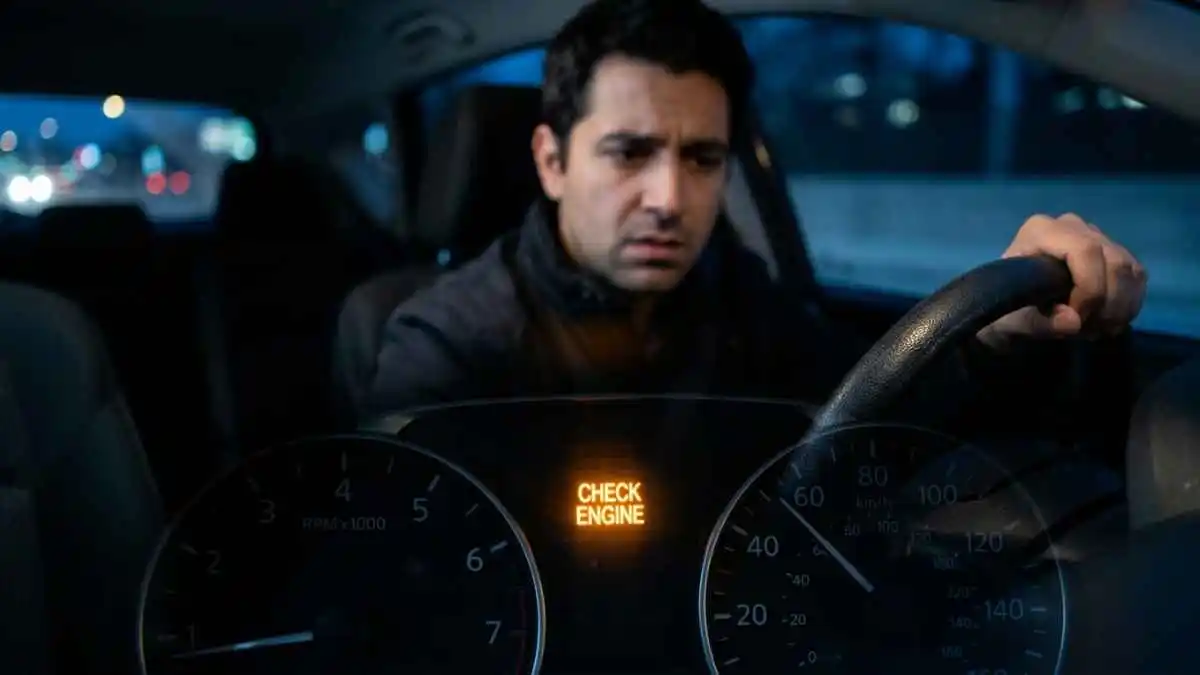
Your check engine light comes on, and within ten minutes you've probably already decided how this ends: pull into the nearest shop, hand over the keys, and brace for whatever number comes back. I get it. I've watched that exact sequence play out more times than I can count in fourteen years behind a service counter.
Here's the part most people never hear from anyone who has a reason to tell them: the light itself doesn't cost you a dime. It's what happens in the hour or two after it turns on that decides whether you're looking at a five-dollar part or a repair bill with three digits in it. I've had customers walk in ready to approve a transmission replacement when the actual problem was a loose gas cap. I've also seen the opposite — someone convinced it was "probably nothing," driving around for three weeks until a fixable problem turned into an expensive one.
None of this is about being suspicious of every mechanic you meet. Most of the shops I've worked alongside are staffed by people trying to do an honest job under real time pressure. But the diagnostic process only works in your favor if you understand it well enough to ask the right questions. So here are the five mistakes I see most often, roughly in the order they tend to happen.
Mistake #1: Paying for a diagnosis you could have gotten for free
A lot of drivers assume the only way to find out what a code means is to bring the car to a shop and pay a diagnostic fee upfront. That's not true anymore, and it hasn't been for a while. Most auto parts stores will read your code at no charge — they're happy to do it because you're standing in their store. A basic Bluetooth OBD2 scanner paired with a free phone app costs very little and does the same job from your driveway.
Walking into a shop already knowing your code changes the entire conversation. You're no longer asking "what's wrong with my car" — you're asking "here's my code, what's your plan to check it." That single shift puts you in a much stronger position, and it costs nothing to get there.
Mistake #2: Accepting a vague explanation instead of the actual code
"It's an emissions thing" or "looks like a sensor issue" is not a diagnosis — it's a placeholder. Every OBD2 code has a specific number (P0171, P0420, and so on), and that number is the starting point for everything else. If a shop tells you they found "a code" without giving you the number, ask for it directly. You're entitled to know what your own car's computer detected.
This matters because codes come in different flavors. A pending code means something was detected once but hasn't been confirmed yet. A confirmed code is the one that actually triggered your check engine light. Treating a pending code with the same urgency as a confirmed one — or vice versa — leads to either overreacting or ignoring something that needs attention.
"What's the code, and what are you checking first — the cheapest likely cause, or the most expensive one?" Any shop that's diagnosing properly will have a straightforward answer. If the response jumps straight to a major part without mentioning what's being ruled out first, that's worth a follow-up question.
Mistake #3: Approving the expensive explanation before the cheap one gets ruled out
This is the mistake that costs the most money, and it happens constantly. Take a code like P0171 — one of the most common check engine codes on the road. In a large share of real cases, it turns out to be a cracked vacuum hose or a dirty airflow sensor, both inexpensive fixes. But it's also possible to trace the same symptom back to a weak fuel pump, which is a much bigger job. The data these two problems produce can look nearly identical on a scan tool.
A shop working through the problem correctly starts with the common, cheap causes and only moves to the expensive ones once those are ruled out. A shop that jumps straight to recommending the big-ticket item — without mentioning what else was checked — is skipping steps. It's not necessarily dishonest; sometimes it's just faster for them. But it's rarely faster or cheaper for you.
Mistake #4: Clearing the code and hoping it doesn't come back
Clearing a code turns the light off. It does not fix whatever triggered it. The underlying issue is almost always still there, and your car's computer will typically detect it again within 50 to 100 miles of normal driving, at which point the light comes right back on. I understand the appeal — the light is annoying, and clearing it feels like progress. But it's the same as taking the batteries out of a smoke detector because the beeping is bothering you.
There's one legitimate use for clearing a code: verifying a repair actually worked. Clear it, drive the recommended distance, and see whether it returns. Used that way, it's a diagnostic tool. Used as a substitute for diagnosis, it just delays the real cost.
Mistake #5: Skipping the checks that don't require a mechanic at all
Some of the most common codes have embarrassingly simple causes. A loose or damaged gas cap alone is enough to trigger evaporative system codes like P0442 or P0455. A stuck-open PCV valve — a small plastic part you can often pull out and inspect by hand — is a frequent contributor to lean-running codes. These aren't things you need a lift or a diagnostic computer to check. They're things you can look at in your own driveway in under ten minutes.
Before any money changes hands, it's worth spending those ten minutes. Not because shops are trying to trick you, but because the cheapest possible cause is, statistically, the most likely one — and nobody has more motivation to check it thoroughly than you do.
- Read the code yourself first — free at most parts stores, or with a cheap scanner.
- Get the actual code number, not a vague description.
- Ask what's being ruled out first — cheap causes before expensive ones.
- Don't clear a code without fixing the cause — it will almost always come back.
- Check the free stuff yourself — gas cap, hoses, connections — before paying anyone.